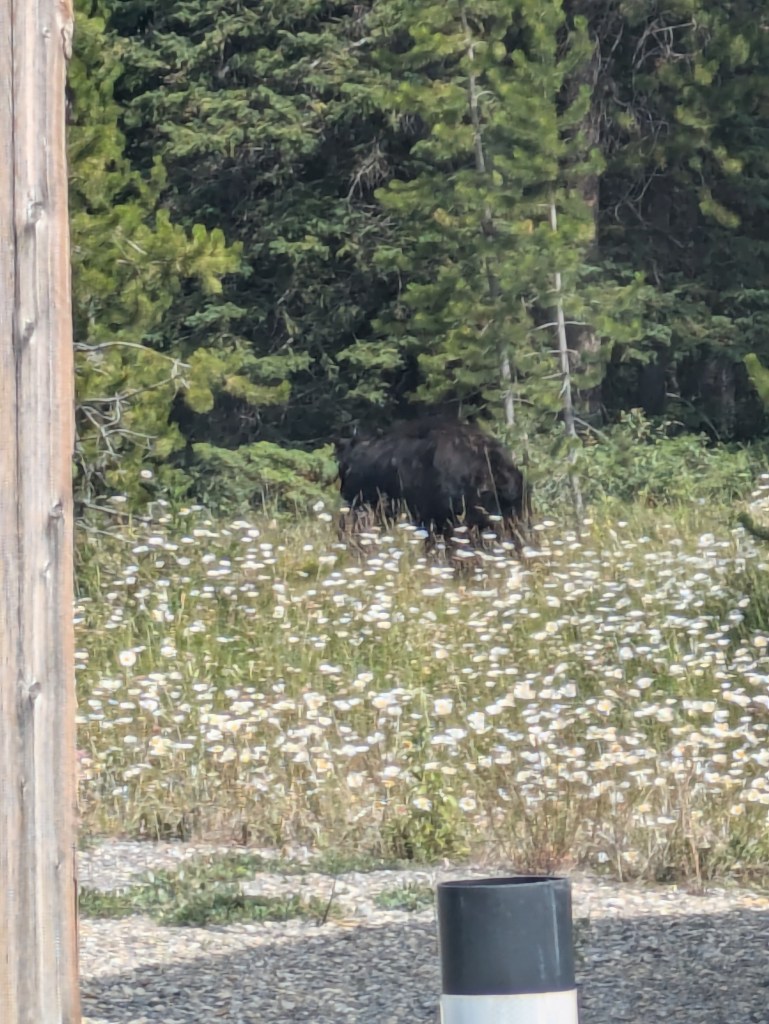
Almost a week had passed since our venture to McKirdy Meadows with Joy and Suka. During this time, we had seen our fourth bear (thankfully from the safety of the car), travelled down through Jasper, over the Icefield Parkway and finally wound up in Banff. We also found ourselves in a hot tub, halfway up a mountain in a thunderstorm; not our smartest idea, nor do I think we have ever moved to fast.
We awoke to our final day, with the prospect of a long flight later in the evening. We had however already planned to make the most of our last day in Canada by climbing the aforementioned mountain – Tunnel Mountain, which rises right above Banff itself. Unfortunately, as we looked out of the window at the surrounding heights, we found them once more shrouded in cloud. Reasonable concerns began to arise, such as hiking up a mountain with poor visibility and in wet or even stormy conditions, as well as the ever-familiar one of Bears, not wanting to come suddenly upon one in the mist. Yet we knew that if we didn’t do it now, we may well never do it at all. And so we waited, and put off making a final decision.
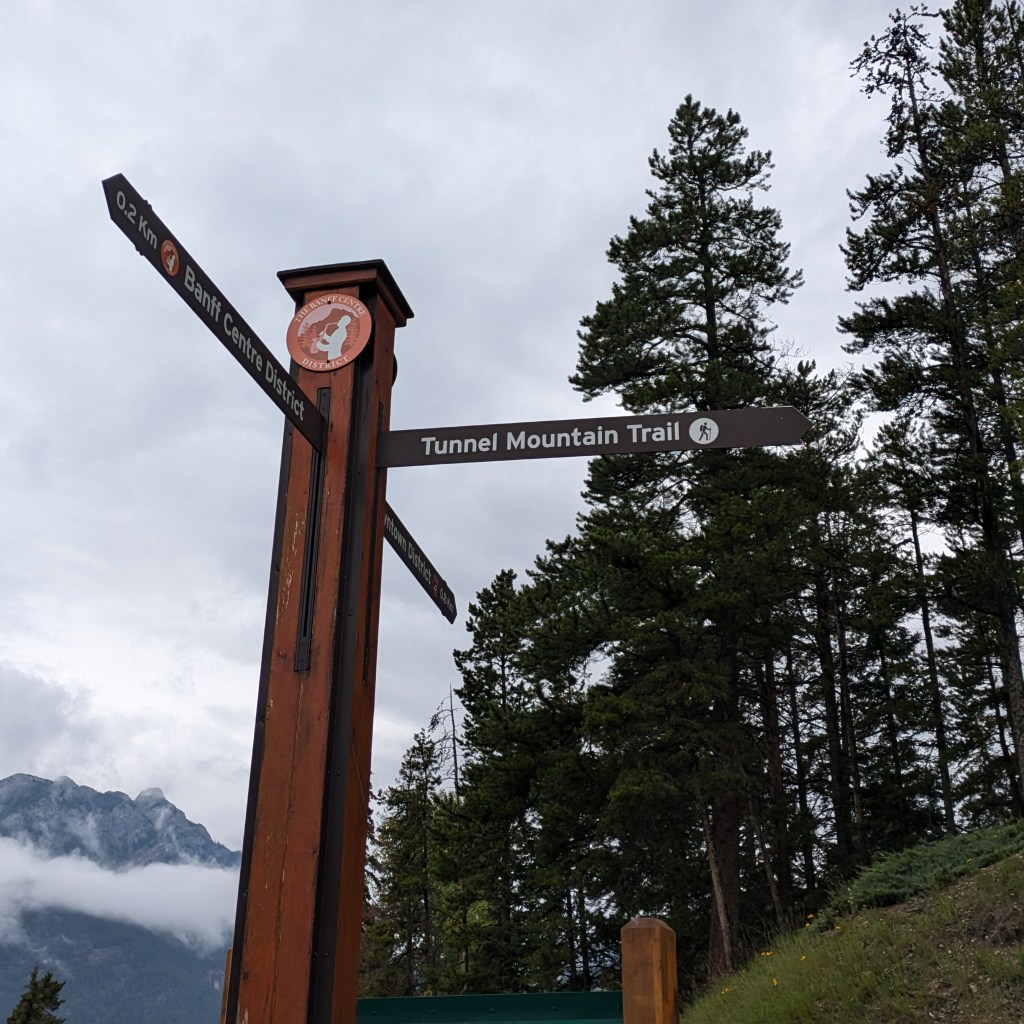
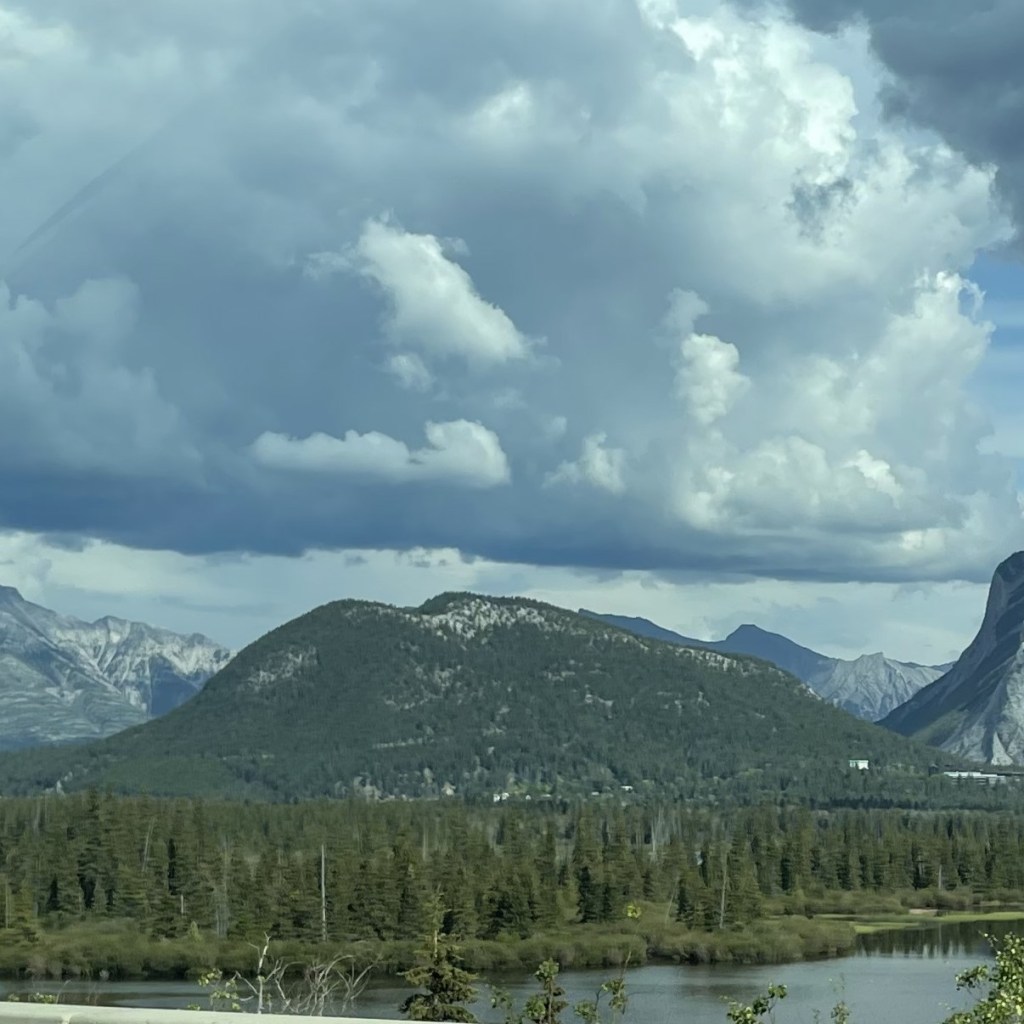
As we slowly packed up and got ready for the long day ahead, the clouds remained resolutely over all the mountains, except for one. The mist rose above Tunnel Mountain to reveal the double-humped back of the miniature Rocky, which is how it earned its original First Nations name ‘Sleeping Buffalo’(we both prefer this name by far). Still unsure of what to do (remaining concerned about bears and potentially worsening conditions), we decided to head over to the trailhead and see what the locals had concluded – after all, they know their country best. Only a few minutes after departing our lovely accommodation, we arrived, and immediately realised that the hiking community weren’t concerned in the slightest – let’s go!
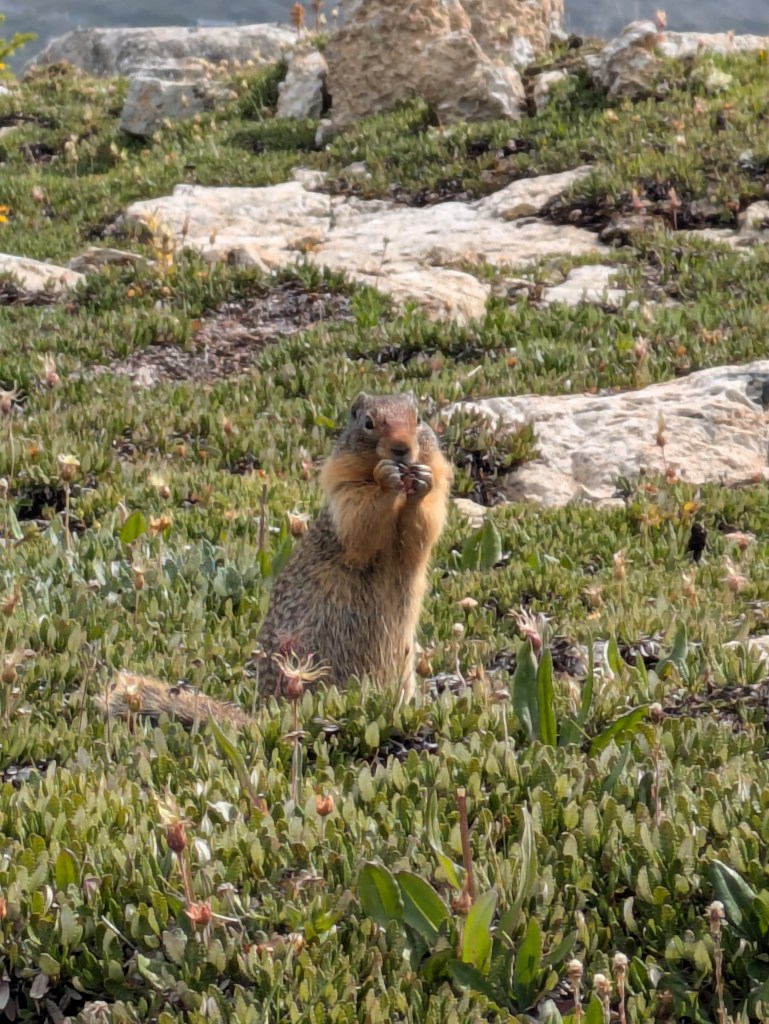
We began the ascent at about quarter to eleven, having this time left the Bear Bell completely behind, after learning since our previous venture that they were more than just annoying, they were in fact dangerous. Our nature tour guide in Jasper informed us that a recent study had suggested that rather than repelling the bears, it actually attracted them, as the sound mimicked that of a Ground Squirrel, one of the bear’s favourite meals – whoops!
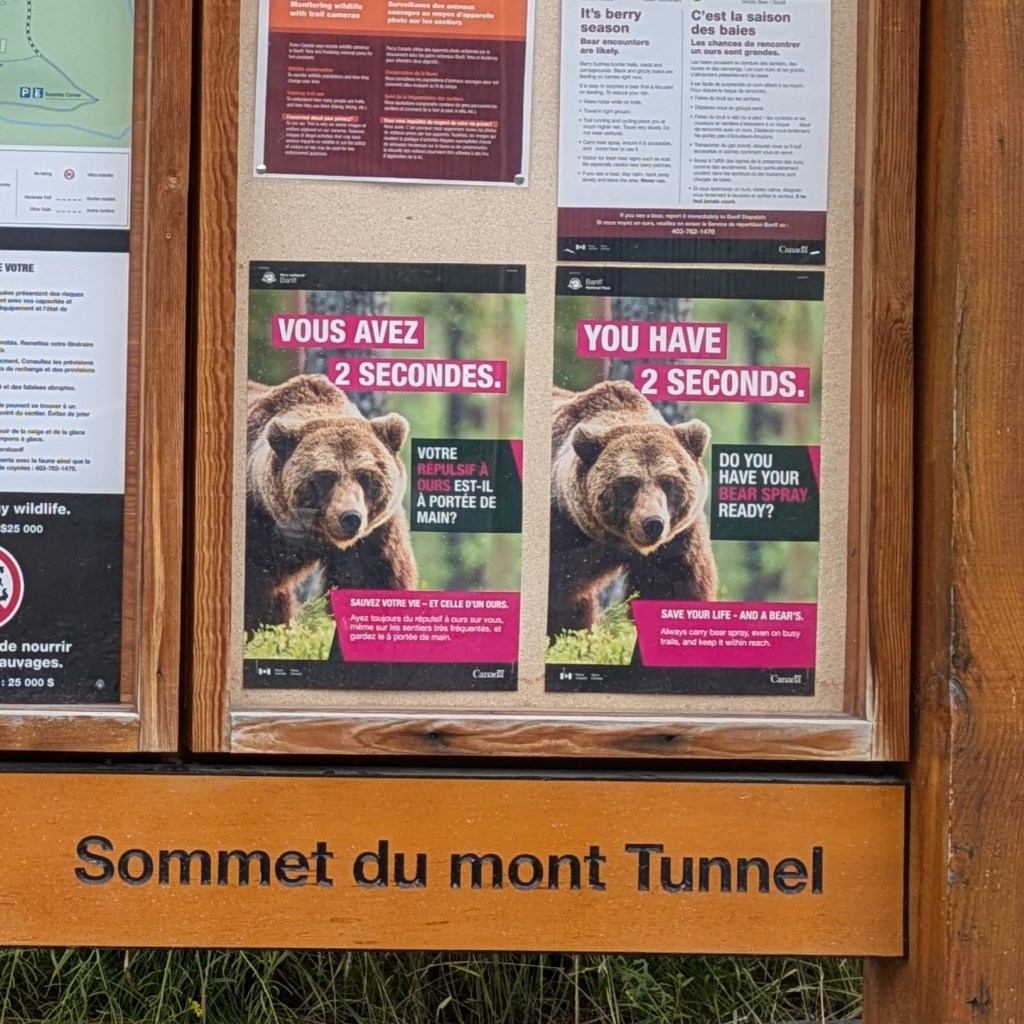
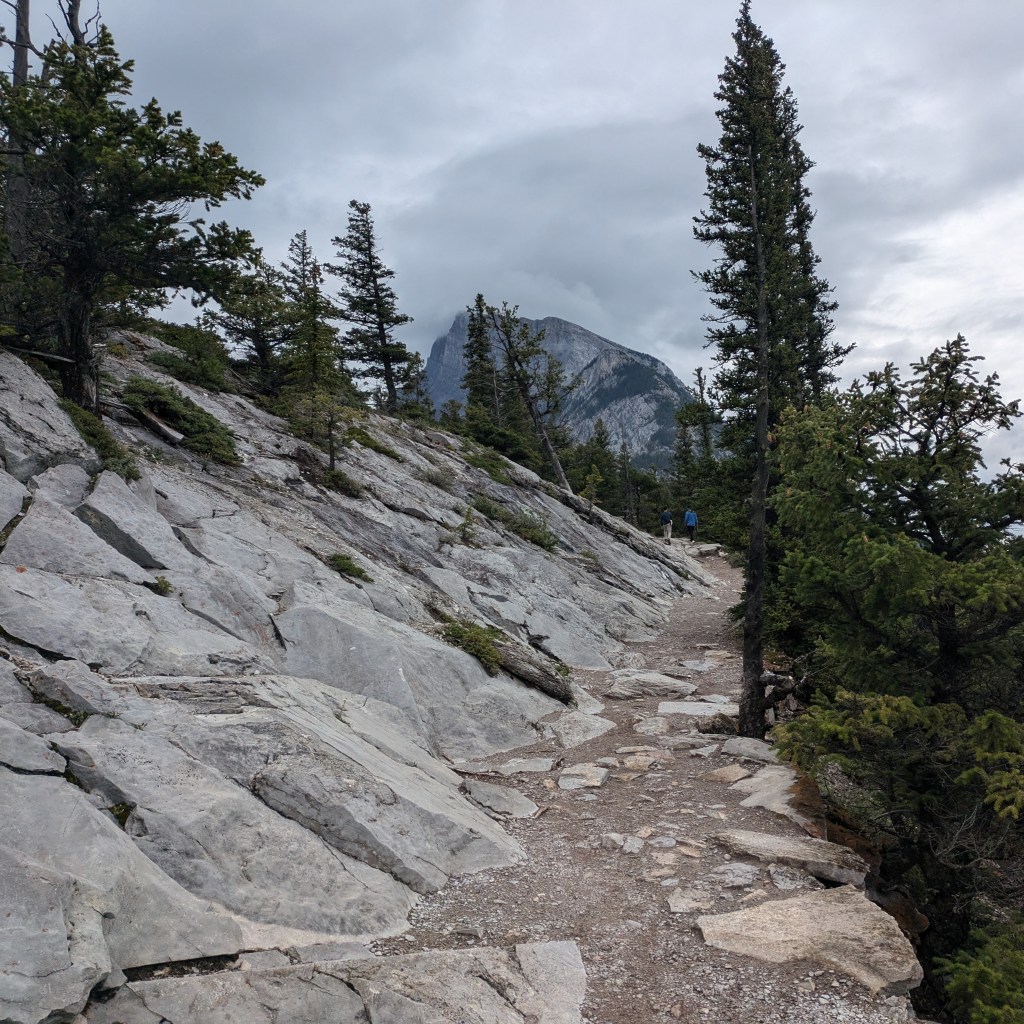
The first stint out of the car park up to Tunnel Mountain road was immediately steep, and woke us up to the climb. We were relieved to find plenty of other hikers on the trail, however we still counted it as ‘going solo’ in bear country – Joy, we hope you are proud. The walk up was as you would expect, a series of ascending cutbacks up the mountain through pine trees, slowly thinning to patches of rock as we drew nearer the summit. We went at a decent pace, overtaking more often than we were overtaken by, and stopping for a few water breaks on the way up. Fortunately the clouds stayed away from our mountain, despite them remaining draped over the surrounding (and much larger) mountains.
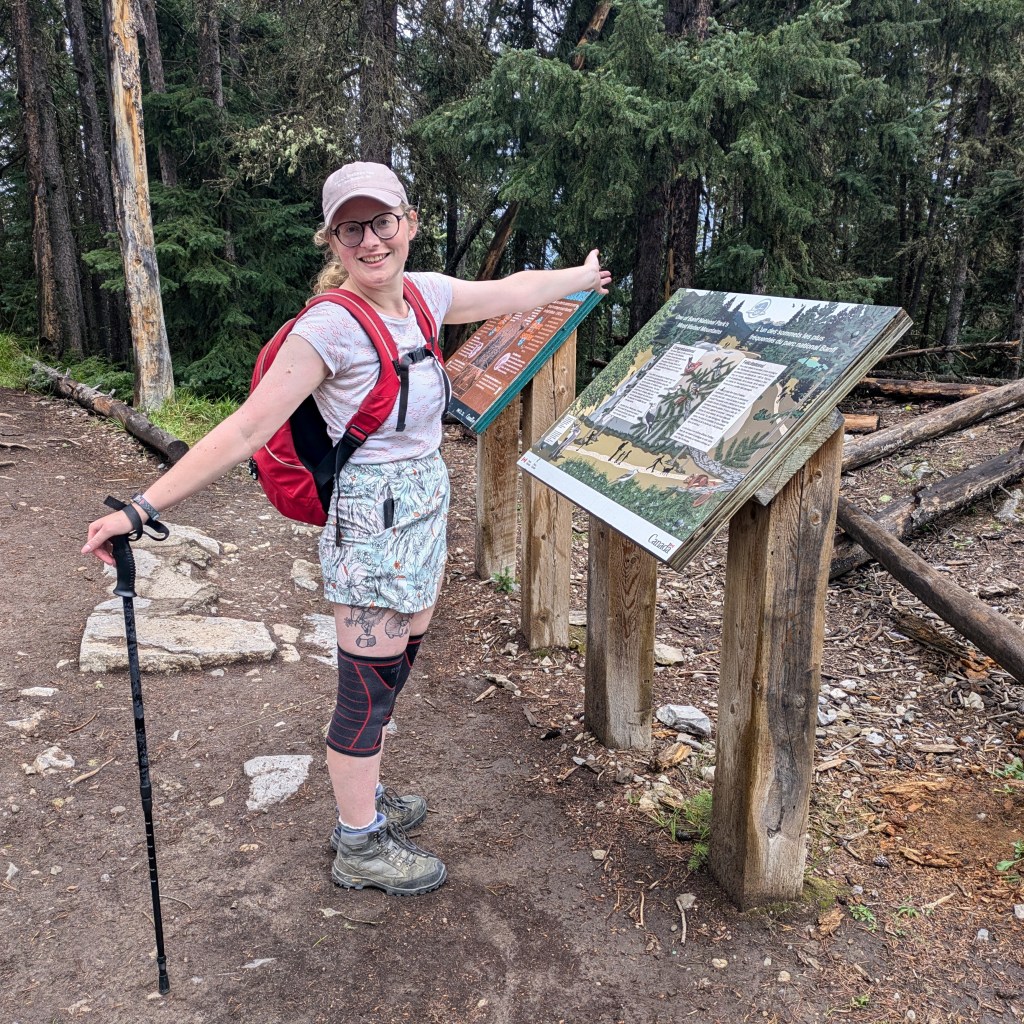
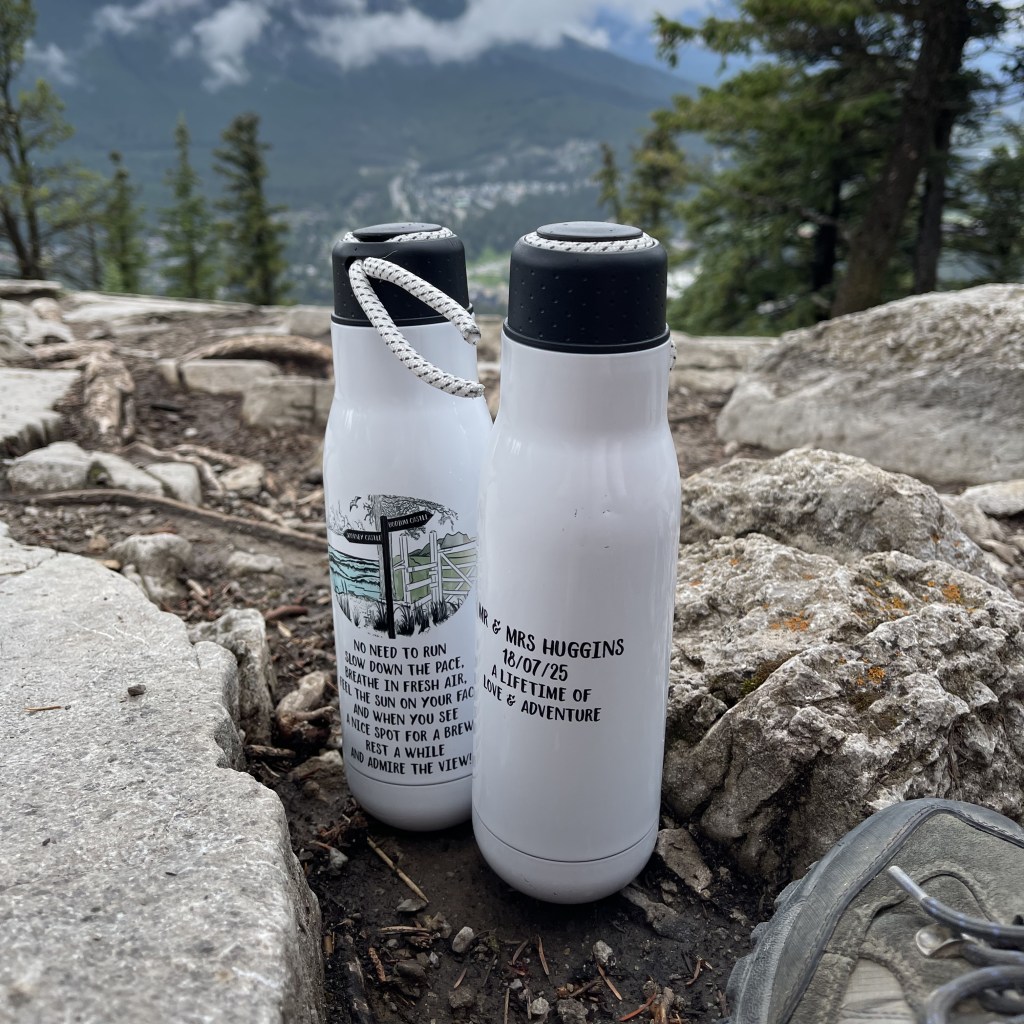
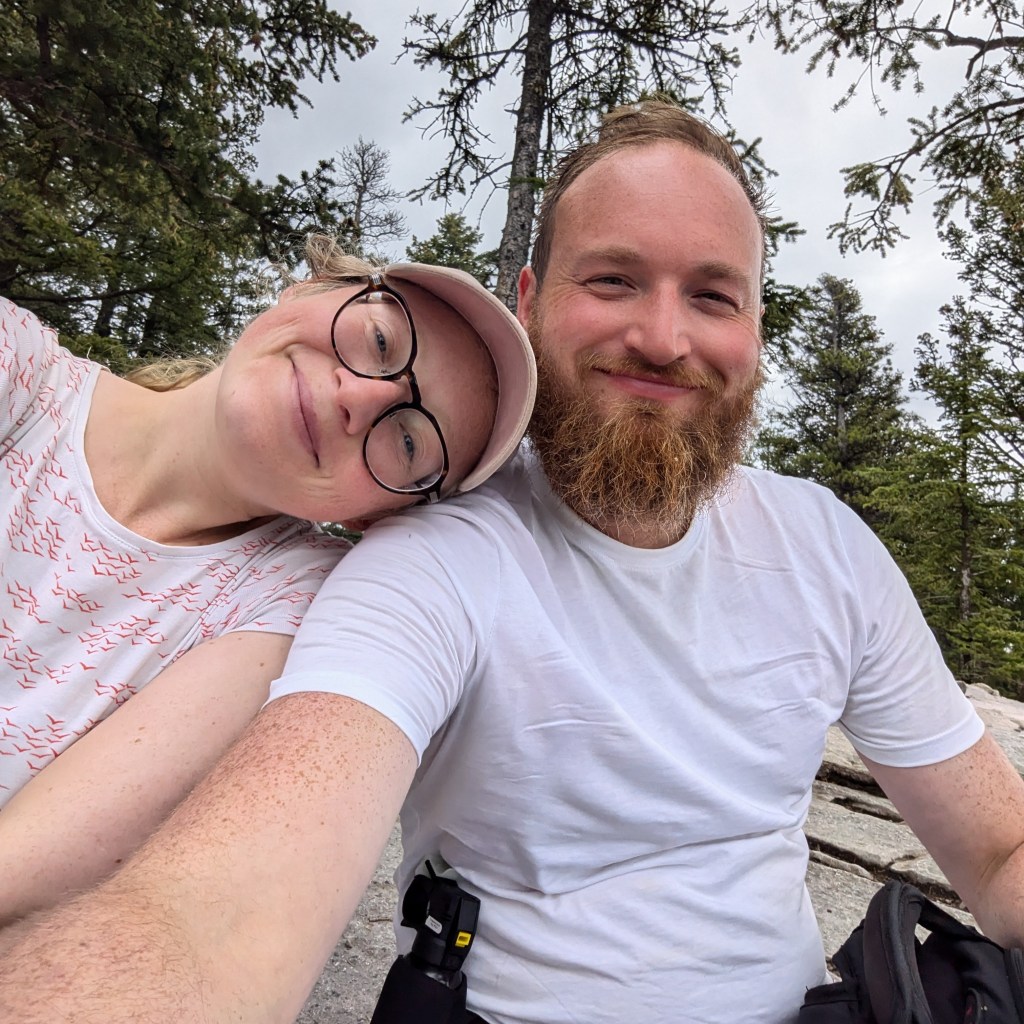
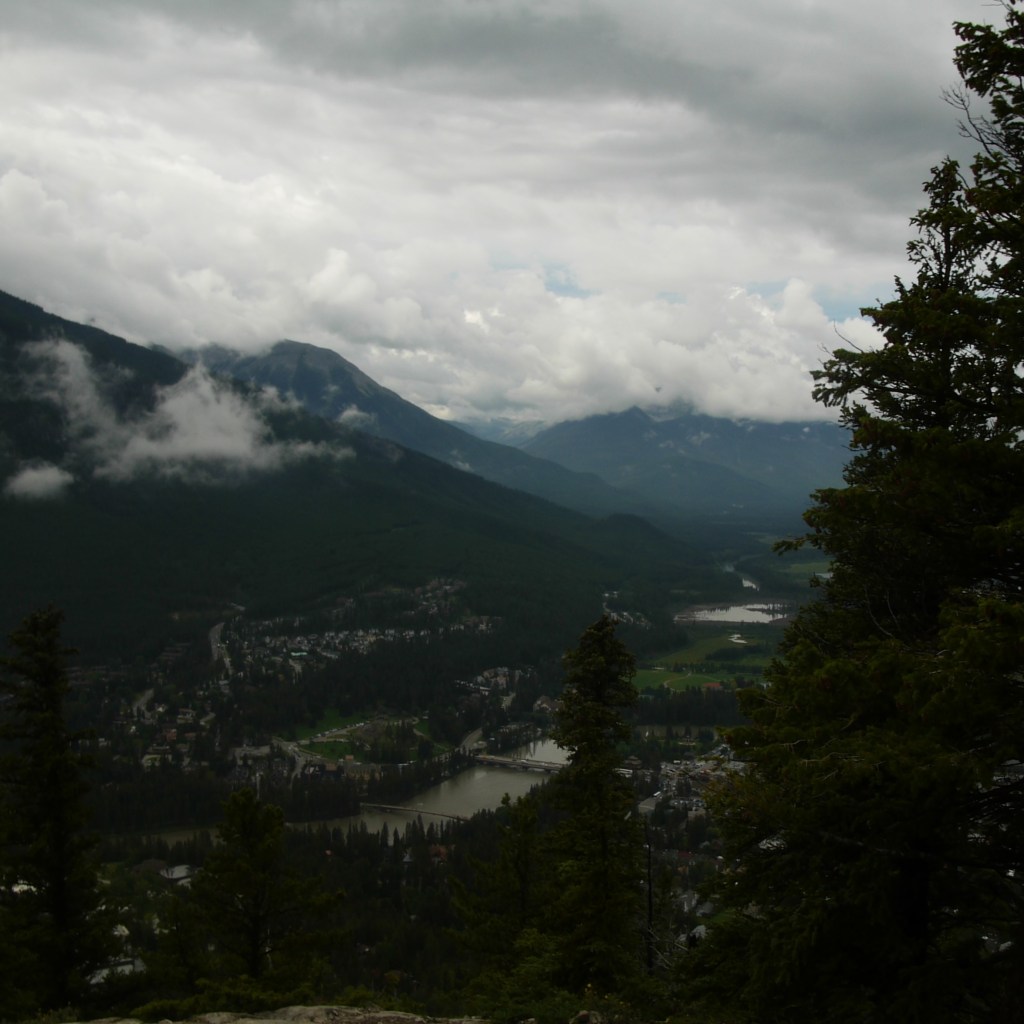
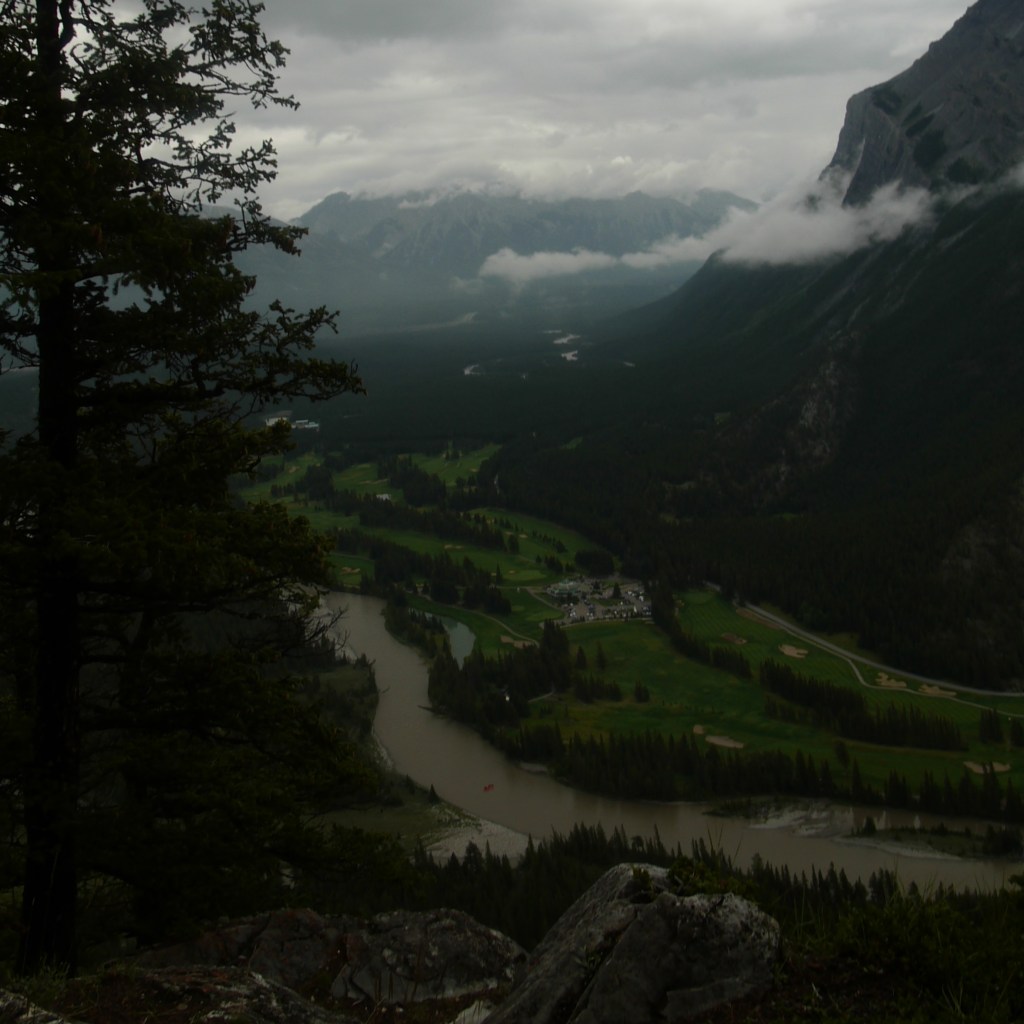
After a simple climb, we made it to the summit only forty-five minutes after we had begun, having climbed 300m to 5551ft. Upon our triumphant arrival, Beth was rewarded with an information board waiting for her at the top – those who know Beth will not be surprised to hear that she was delighted. We sat ourselves on the rocky pinnacle and enjoyed the views of Banff below and the surrounding valleys, enjoying a sip from our new water bottles and some snacks (shout out to Dill Pickle crisps, aka the find of the trip). There was a tiny spittle of rain, but nothing more.

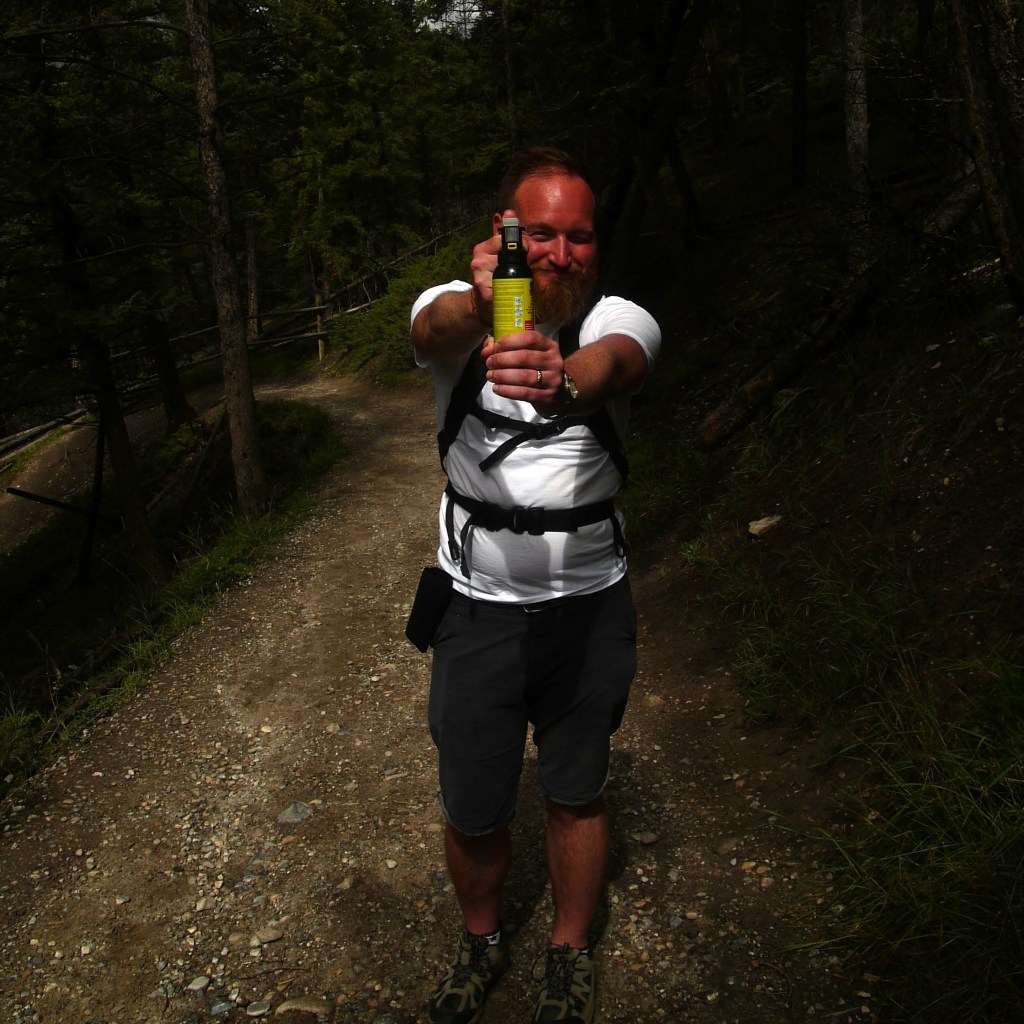
And so the return journey began, which was just as stress-free, and we returned to the car at half past twelve, giving us a respectable time of one hour and forty-five minutes. We can also now say that we have summited one of the Rockies – okay it was one of the easiest ones, but it still counts! All that was left to do was to dispose of the thankfully still unused Bear Spray – you are not allowed to bring the stuff onto an aeroplane, which, to be fair, is quite a reasonable rule. I had already decided to give it to our waitress at our hotel who had been keeping me topped up with pints for the last few days – and so we returned to the hotel and did just that!

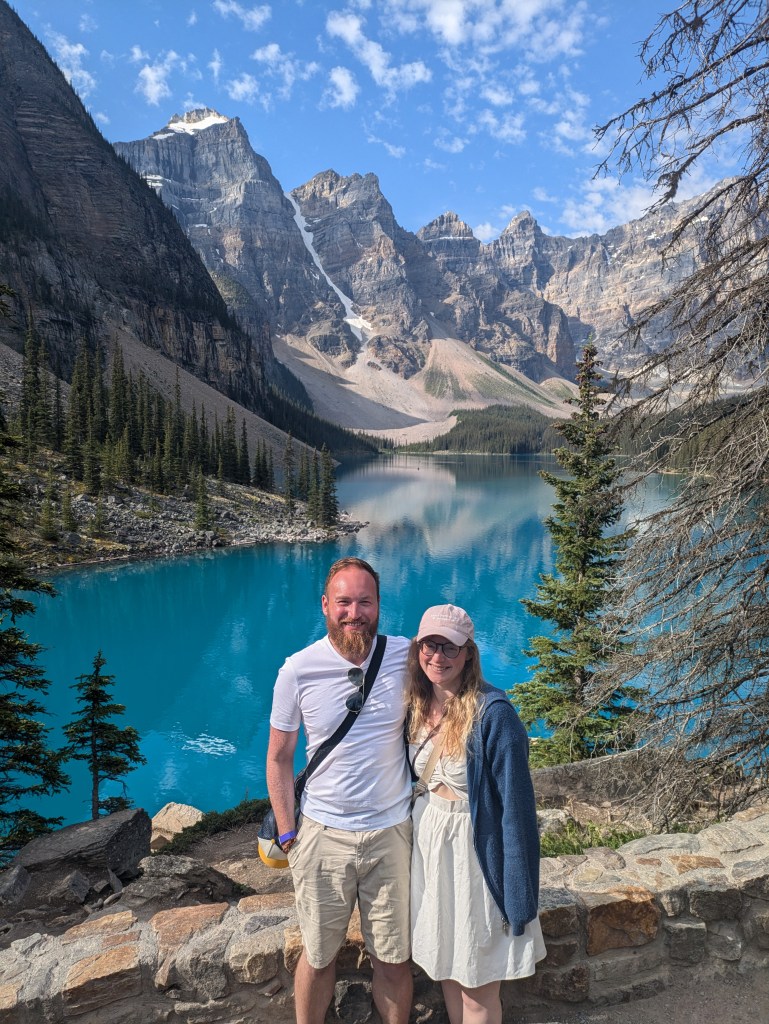
Thus, our greatest adventure yet came to an end. What an amazing time we had! Together we drove over a thousand miles, stayed in six hotels and made countless memories that we will treasure forever throughout our years of marriage ahead – thank you Canada!
In addition, I was inspired to write a piece from earlier in our trip about an experience that left quite an impression. I am unsure where else to put it, so I will be putting it here.
A wound still bleeding
Today I felt a sadness that did not belong to me.
It belonged to the land, the sea, and a lost people.
On the morning of Thursday 24th July 2025, my wife and I drove up the coast of Vancouver Island to Campbell River. Our first stop of the day was the local museum. Initially, the visit was primarily for Beth, who loves history and will read every information board possible. Meanwhile, I will usually do a lap of the museum in a few minutes, press any buttons there are to press and then happily dawdle about until Beth is good and ready. On this occasion however, this pattern changed rather quickly. Upon entering the first area of the museum, we found ourselves surrounded by items belonging to the “First Nations” (aka, the indigenous people). Bright, intimidating masks adorned the walls, together with canoes, weapons and objects that spoke to an ancient, mystical way of life. I love this stuff; anything with a hint of magic, myth or legend – and the First Nations culture is full of it. I walked about reading the information boards and labels, taking it all in. We entered a dark room and sat down on a bench, and listened as, with the help of more masks, we heard the story of an ancestor who travelled throughout the ocean defeating great monsters as he went.
Rather surprised to find myself enjoying the experience as much as I was, we wandered through to the second section of the museum. As we did, a final First Nations display caught my eye. Within the display stood a hundred illuminated small figures. Below, was written the following:
Our towns and villages were made poor by disease and pestilence. Nine out of ten children…..lost to foreign diseases along with nine out of ten of their parents; nine out of ten doctors, composers, artists, elders, leaders, warriors……gone……almost within the course of a single lifetime.
Our spirituality was affected. How could any community cope in the face of such a loss….. if 90% of the mothers, teachers, doctors and police were to perish?
As I read, light after light was extinguished before my eyes.
We continued through the rooms beyond, and watched as Europeans came to the land, settled, colonised and cut down the forests cherished by the First Nations. Of course, we know the history. Yet somehow, it suddenly felt real. Something had kindled inside of me.
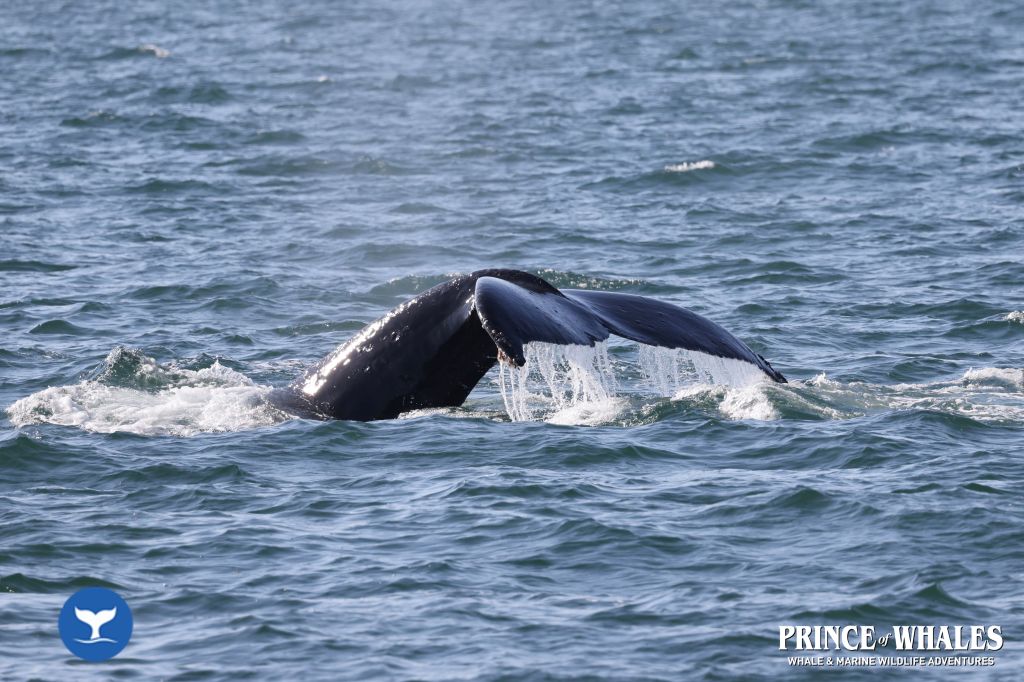
That afternoon, we were booked onto the “People, Water, Land Tour”. We arrived at the harbour, and we were greeted by our guide, Janet, who is an elder of the Homalco First Nation. We climbed aboard the boat which would take us out to sea, piloted by Captain Mark, and he whisked us away through Vancouver Bay. First up for the afternoon was a little whale watching, and we spotted several Orcas, as well as a couple of Humpbacks, as we ventured deeper into the smaller islands that sit in the northern end of the bay.
Eventually, Mark brought the boat into dock at a former settlement, these days called “Church House”, where Janet and her ancestors used to live. We were the only ones there, and Janet led the way onto land as Mark brought up the rear. As we made our way through the forest, Janet showed us mosses and plants that can be used as medicines for various ailments, describing a way of life far from our own day-to-day. Janet then led us out of the trees, onto a small, sunny clifftop overlooking the sea below, and out on the surrounding islands. It was an awe-inspiring spot, the kind of timeless place where the ancient magic of the world still seems to come alive. She then brought out several thin strips of soaked Cedar wood and handed two to everyone present, before showing us a technique to twist them about each other in such a way that produced a beautiful wooden bracelet. We set about making our own, whilst Janet relayed to us one of the Homalco stories. Unfortunately, because I am incapable of doing two things at once and being so focused on my bracelet, I missed it. Fortunately, Beth can do two things at once, and so was able to repeat it to me when I was paying attention.
It was at this point that Janet, already wearing a woven hat adorned with a large eagle feather, shrouded herself in a shawl and held a large rattle in her hand. She began to sing in her native tongue, The Song of the Warrior Women. I won’t pretend to understand the words, but as Janet’s voice filled the air and flowed out over the lapping sea, you could feel it coursing through you. It was beautiful. I was filled with a wonder of these ancient people as I felt their old magic all around us. The song ended, and a silence followed, filled only by the lapping of the water and gentle breath of the wind.
A question came to mind, a question that I wasn’t sure would be appropriate to ask.
I asked Janet whether it made her angry.
She spoke of the generational trauma that had been passed through her family, of the residential schools that both her mother and grandmother had been forced to attend. She said that there was no point ignoring the wound, and that all of the missing First Nations young girls who go unfound still speak to the pain to this day.
It struck me then that this was not only a grievous wound, but one that was still fresh. One that still hurt. One that was still bleeding.
Janet did not say that she was angry. And I do not believe that she is. But you could hear the truth in her voice. The long, deep pain suffered by her and so many others like her.
Soon after, we turned and began to make our way back to the boat, as my mind began to spin with new thoughts. A sudden feeling of guilt washed over me. Guilt of simply being there, of the twisted situation of Europeans stealing the land and leaving them utterly destroyed, and then saying, “Hey, if you take us around the land we took and tell us all about it and how we acquired it, that would be great!”, just so yet more European tourists like me can come along and goggle at it, in some sort of sick, ancestral triumph. I did my best to offer a few clumsy words of admiration for their culture, but I have always been better when I can sit and think about my words.
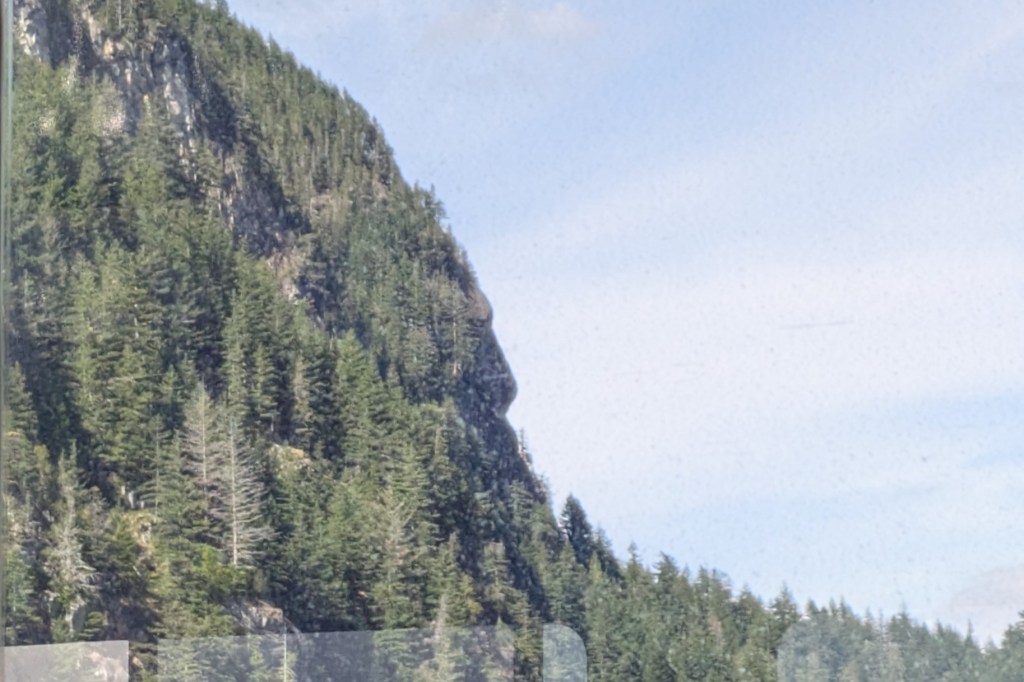
Thoughts and feelings swelled within me, so much so that by the time we had returned to the boat and began to make our way back to Vancouver Island, I could feel the beginnings of tears in my eyes. At this rather timely moment, we stopped beside one of the other islands. Janet indicated up at the rockface. Before us was the face of an ancient chief looking out from the land across the waters. Completely naturally occurring, but clear for all to see.
The mighty chief from a time long passed, who had had to witness it all. A chief who had seen his people, land and sea decimated, raped and murdered before him. A chief whose sadness, I was surely feeling but a trickle of.
Still, he watches.
He watches a war that has been waged on his people for years, and continues to this day. A war which now seems impossible for them to win, for what has gone cannot come back, and is surely lost to the depths of time.
I thought about the chief as the boat continued through the maze of islands.
Through it all, he had watched over his people.
And still he stood.
The chief had not surrendered.
And nor are the First Nations entirely defeated.
Through individuals like Janet, with her stories and her songs, the wonder and culture of a people the modern world seems to have disregarded, still survives. And perhaps we should spend more time learning about their old ways, for people who have thrived for so long harmoniously alongside nature can surely teach us all a thing or two.
The Homalco are a people of the sea, and their blood that of the earth. So long as there is water in the ocean and the Chief watches over them, they will never die.
 Matthew G. Huggins